Pascuales Double-Barrel: Noah Beschen and Eimeo Czermak in Ultra Slow-Mo
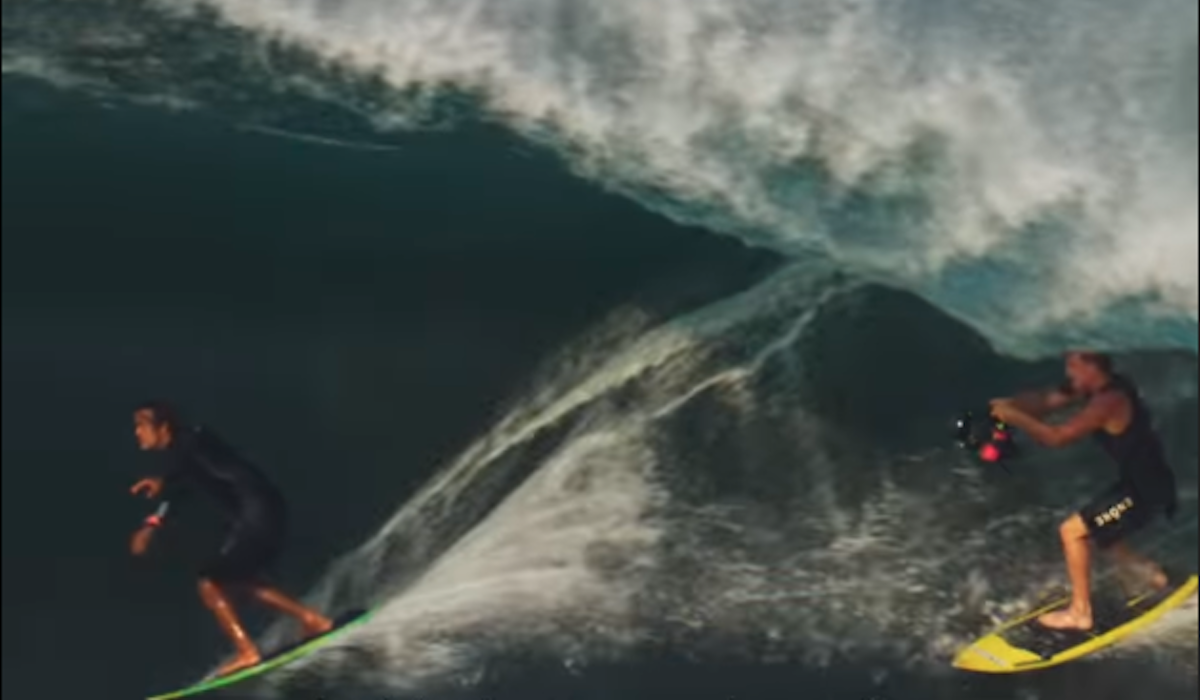
Noah Beschen’s latest footage from Pascuales is the kind of surf clip that lives somewhere between pure spectacle and a careful exercise in trust. Beschen and Eimeo Czermak link up for a double-barrel run that looks—on first watch—dangerous, cinematic, and borderline impossible to time.
The session was captured on a high-speed Phantom-class camera capable of 4K at roughly 800 fps, the kind of kit that has become a specialty tool in surf cinematography. There’s a small price-note to flag: the camera is referenced at $18,000! Either way, we’re talking Phantom-level hardware, not a consumer rig.
Watch: Noah Beschen — DOUBLE BARREL with Eimeo Czermak (main clip)

Why Pascuales? The Mexican point has a long-reputation as a hollow, fast, right-hand wave that rewards precision. Compared to Pipeline, Pascuales gives photographers and filmmakers room to stage bigger pushes and repeated takes — which is exactly what a slow-motion experiment needs: repeatable sections and predictable peaks.
The footage reads like a study in timing: two surfers staggered inside the same tube, one slightly ahead to take the lip while the second threads the exit—an old-school double-barrel aesthetic updated with 800 fps detail. The slow-motion pullbacks show lip geometry and face compression in a way normal-speed footage simply can’t.
A quick note on safety and context: Eimeo Czermak is no stranger to heavy waves, he suffered a serious back injury at Pipeline earlier in the year… That history adds weight to watching him in a close-quarters scenario like this.
Historical frame of reference
Double-barrels have a lineage in surf lore. The most-cited early example is Mark Richards and Shaun Tomson’s Off The Wall pairing from 1976—textbook cinematic double-barrel territory. More recently, big-wave tow sessions like Nathan Florence and Kai Lenny’s Jaws double-barrel in 2019 show how the concept has migrated into tow-in and big-wave environments. On the performance- and editing-side, contemporary teams (Jack Robinson & John John Florence at The Box, among others) keep refining the visual vocabulary.
Watch: Mark Richards & Shaun Tomson — Off The Wall (1976)

Watch: Nathan Florence & Kai Lenny — Jaws Double Barrel (2019)

Behind the camera
Beschen’s Instagram and Eimeo’s posts offer behind-the-scenes glimpses: rigs, framing rehearsals, and the slow-motion playback that helps the team pick the best timing. These posts don’t lay out every technical detail, but they show the practical side of mounting and testing a high-speed camera in the surf environment.
Noah Beschen — Instagram
Eimeo Czermak — Instagram
What this means for surf cinematography
Two things stand out. First, the accessibility of high-frame-rate storytelling is changing what surfers and filmmakers try to capture: micro-details (lip flex, face deformation, spray) become narrative elements. Second, pieces like this show the trade-off between expensive kit and creative payoff. A Phantom-class camera is a real investment, and slow-motion sequences like Beschen’s are the kind of content that can justify that price if they land with editors, brands, or a large YouTube audience.
Final frame
Beschen and Czermak’s Pascuales clip is more than a flex of tech; it’s a measured nod to a long surf tradition. The double-barrel is an old stunt that still looks fresh when delivered thoughtfully—especially when you can slow it down to study the moment where risk and beauty meet.