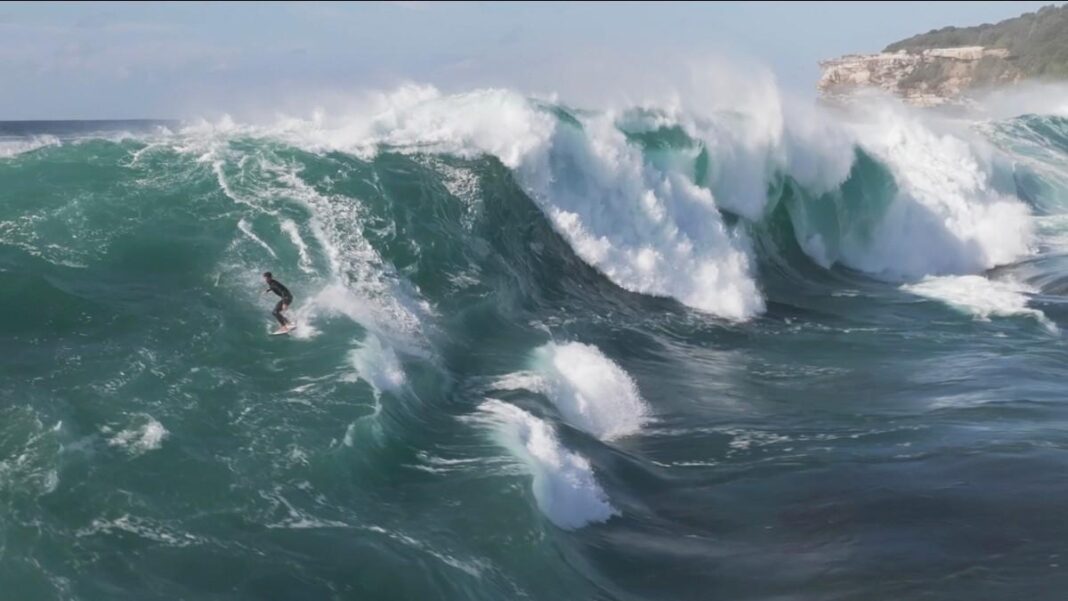


Just before dawn on August 10, 2025, a mountainside above Tracy Arm fjord in southeast Alaska gave way, sending more than 64 million cubic meters of rock crashing into the water below.
The impact triggered a mega-tsunami with a runup of 1,578 feet (481 meters), the second-highest ever recorded, according to the U.S. Geological Survey. The fjord, about 80 miles south-southeast of Juneau, sees heavy cruise ship and kayak traffic each summer, but no injuries or fatalities were reported.
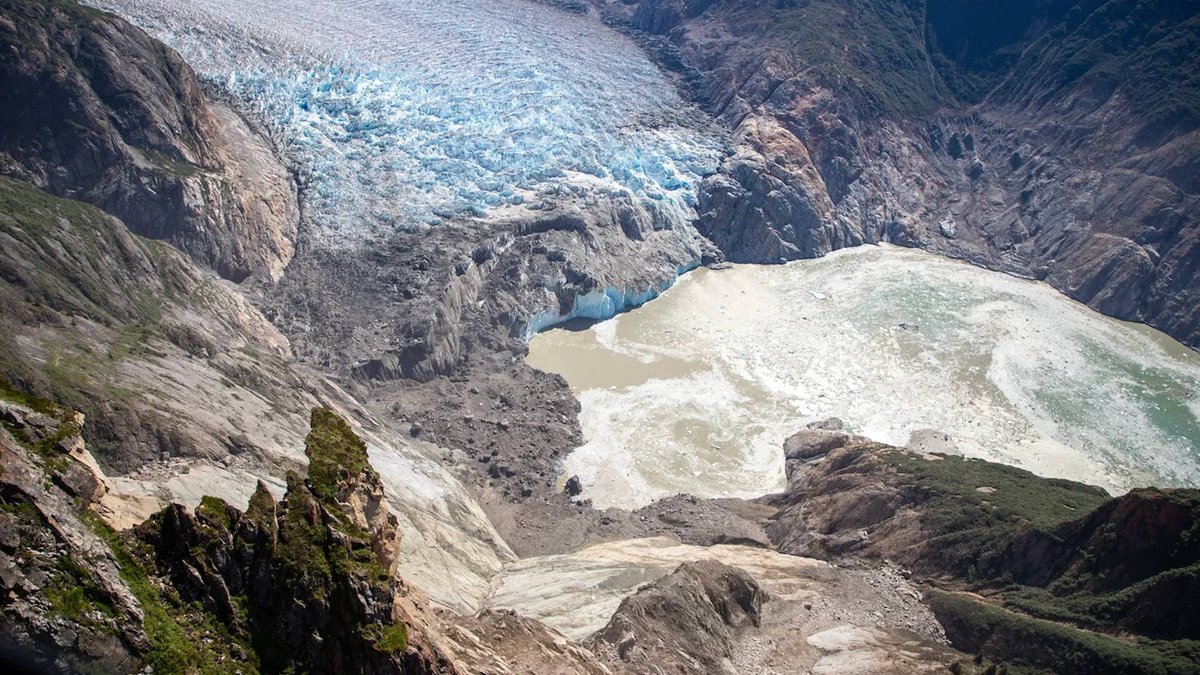
South Sawyer Glacier retreat set up the collapse
In the days before the slide, seismic monitors picked up rising microseismicity in the slope above Tracy Arm, intensifying sharply about an hour before the rock let go, according to a peer-reviewed study published in the journal Science.
At 5:26 a.m. Alaska Daylight Time on August 10, roughly one vertical kilometer of rock broke free, crashing onto South Sawyer Glacier and into the fjord below. The collapse generated long-period seismic waves equivalent to a magnitude 5.4 earthquake, the study found.
South Sawyer Glacier had pulled back about 1,800 feet in the year before the slide, stripping away the ice that had braced the valley wall above it. Researchers point to that retreat, driven by a warming climate, as the reason the slope gave way when it did.
Second-largest tsunami ever recorded trails only Lituya Bay
The wave that followed now ranks as the second-largest tsunami ever documented, with a runup scientists estimate at 481 meters (1,578 feet). USGS puts the broader range at roughly 470 to 500 meters, depending on whether the measurement comes from peak runup or from readings taken on the opposite slope.
Only the 1958 Lituya Bay tsunami, also in southeast Alaska, stands taller, with a peak runup of 530 meters (about 1,740 feet), according to USGS. Preliminary analysis of photos taken by kayakers on the water that morning suggests the Tracy Arm wave still measured at least 30 meters, roughly 100 feet, by the time it reached Sawyer Island.
Just an unfathomably large wave was generated. I can’t imagine how terrifying it would have been to be a fly on the wall there.
That’s from Dan Shugar, a geomorphologist at the University of Calgary and the corresponding author of the Science study.
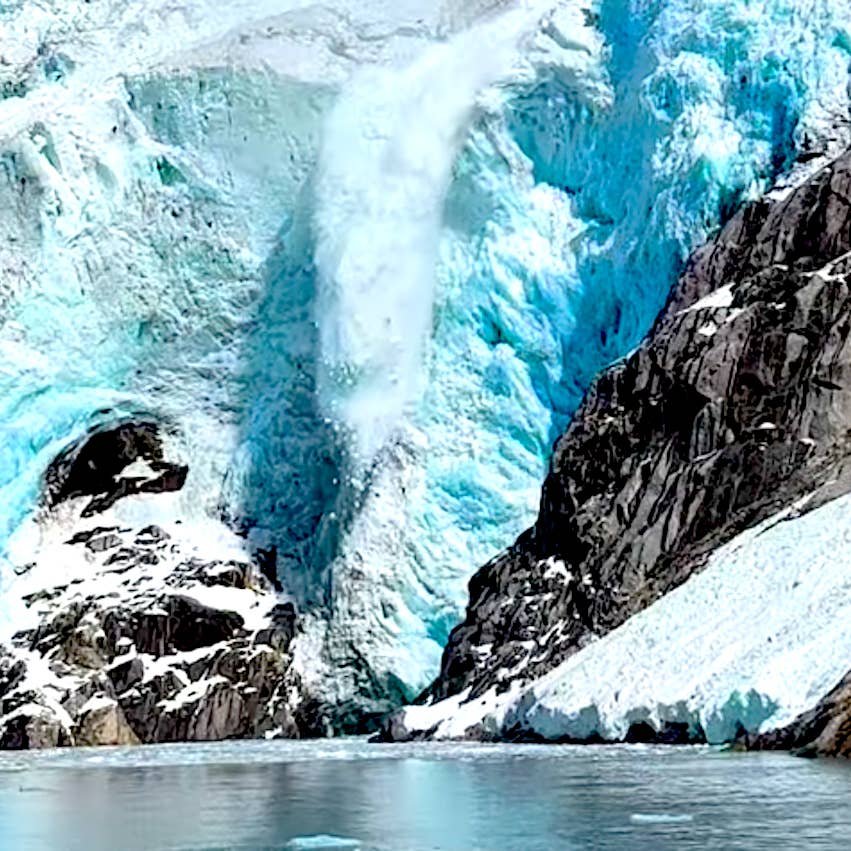
Helicopter survey captures a scraped-clean fjord
Three days after the slide, USGS geophysicist Cyrus Read and scientist John Lyons flew a reconnaissance mission over Tracy Arm, documenting a landscape stripped down to bare rock. Vegetation had been torn away more than 1,000 feet above sea level, leaving pale rock scars where forest once stood.
Water trapped in the fjord kept sloshing back and forth in a seiche for more than a day afterward, and seismic instruments recorded signals from both the landslide and the sloshing water on the opposite side of the planet.
The research behind the imagery was led by Shugar along with USC tsunami modeler Patrick Lynett and Ground Truth Alaska scientist Brentwood Higman. Their findings were published May 6, 2026, in Science, nine months after the event itself.
Cruise ships and kayakers share a fragile corridor
Tracy Arm and neighboring Endicott Arm draw more than 20 boats a day during the summer season, including as many as six large cruise ships carrying up to 6,000 passengers apiece. The slide struck before dawn, when traffic through the narrow fjord runs lightest.
There are frequent cruise ships up in that area in Tracy Arm. And if one had been there at that time, it could have been a real problem.
The warning comes from Cyrus Read, the USGS geophysicist who led the aftermath survey.
Scientists are now watching other glacial fjords across Alaska and beyond, wary that retreating ice is loosening slopes the way it did above Tracy Arm. Nothing flagged this slide before it fell, and researchers say the next one may give no more warning than this one did.