Steepline Magazine is where surf, skate, and lifestyle culture come together.
We’re here to tell stories from the lineup, the streets, and the places in between.
Born in 2025 in French Polynesia, Steepline started with a simple idea:
share the news, moments, and voices that make board sports more than just sports.
What We Cover
Steepline Magazine spans the full spectrum of surf and skate culture. From contests, heavy sessions, and local legends to surfskate communities, gear guides, van life, and dream destinations. We dive into the ways ocean protection, culture, and society shape the ride, while bringing interviews with underground shapers, world champions, and the voices that define our scene. Through features, podcasts, and videos, we share news, conversations, and highlights you won’t find anywhere else.
Why We Do It
Because surfing and skating aren’t just sports: they’re cultures, communities, and ways of life. That’s why we stand for accuracy in telling stories as they happen, independence with no spin or fluff, community that gives space to voices from every corner of the scene, and a commitment to keeping the ocean and our playgrounds alive for the next generation. Steepline Magazine is part of the Steepline brand, based in Tahiti but built for a global audience of surfers, skaters, and ocean lovers.
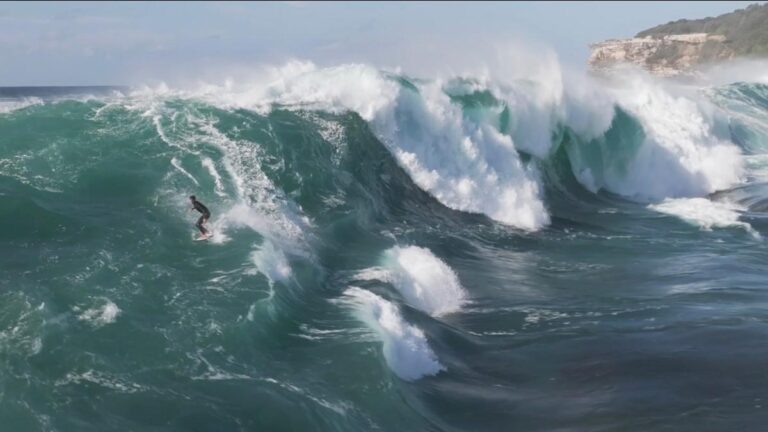
This Cape Solander session looks outright apocalyptic—and you’ll understand why in the first 10 seconds.
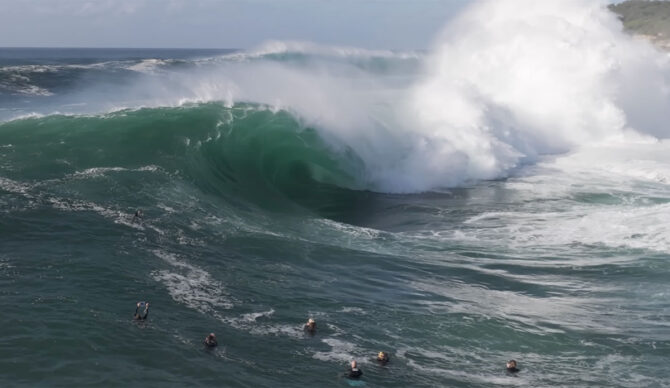
“Are you paddling for this? Me neither.” Photo: YouTube / We Bodyboard
Drone pilot Shaun Petersen quietly sat on this full-session footage for nearly a year before finally releasing it through the We Bodyboard YouTube channel. The wait? Absolutely worth it.
The clip captures Cape Solander—known to locals simply as “Ours”—at its most violent. Towering, heaving walls of ocean detonate over shallow reef while Australia’s most committed big-wave chargers scratch into bombs that look more like extinction-level events than rideable waves. The aerial perspective makes it even more gut-wrenching: you see the scale, the spray, the sheer tonnage of water collapsing with thunderous force.
Full session: “THIS IS INSANE!! BIGGEST CAPE SOLANDER IN A DECADE!!” via We Bodyboard / Shaun Petersen
Jason Kempshall of the We Bodyboard channel summed it up perfectly:
“When this dropped into the inbox I was left in disbelief… to see the whole day from start to finish is something else! BOY was it worth the wait.”
He added the obvious disclaimer: “Only the bravest (and maddest) need apply!”
This isn’t content for anyone looking to replicate it. Cape Solander has hospitalized plenty of experienced watermen over the years, and this swell represents conditions where even elite chargers were questioning their life choices mid-paddle.
But from the safety of your screen? Pure, jaw-dropping spectacle.
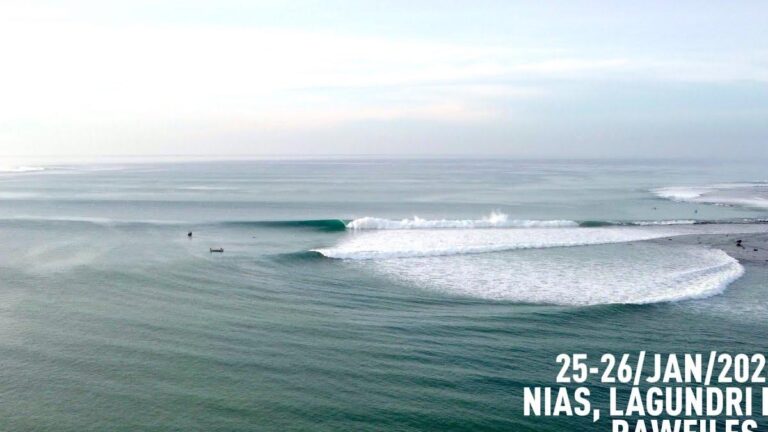
A long-period swell hit Lagundri Bay on January 25–26, 2026—months before the island’s typical surf season—gifting locals and expats with clean lines and virtually no crowd.
Nias just reminded the surf world why it’s considered one of the planet’s premier right-hand point breaks. On January 25–26, an unexpected long-period swell rolled into Lagundri Bay, producing surfable waves during a month that normally sees flat spells and minimal activity. The result? World-class conditions with only a handful of riders in the water.
Off-Season Magic
Lagundri Bay’s prime surf window typically runs from May through September, with some swells pushing the shoulders into April and October. January, by contrast, is deep off-season—a time when most traveling surfers have written the Indonesian wave off their radar entirely.
That’s precisely what made last week’s swell so noteworthy. While peak season often sees the lineup packed with international visitors jockeying for position, this early January pulse attracted mostly locals and a scattering of expats who call the island home. For those lucky enough to be in position, it was a rare gift: Nias at its mechanical best, without the usual crowd factor.
Footage Confirms the Session
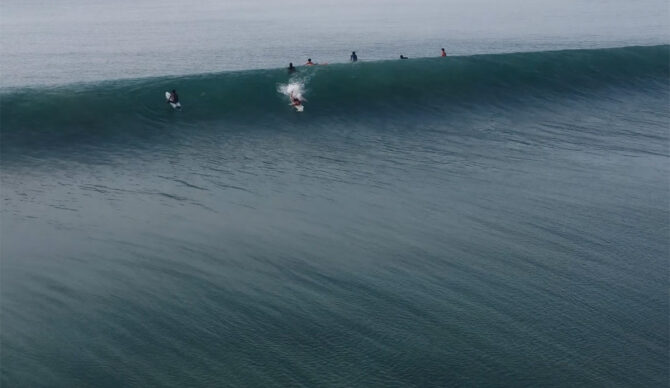
The YouTube channel Surf Raw Files captured the swell on film, releasing footage that shows glassy, reeling walls with only a few surfers threading through the lineup.
“January is not the season for Big Nias, unless you wanna have some fun longboard, fun-size shortboard waves. But the first long-period swell came this year early to the Lagundri Bay. Mostly locals and expats scored with only a few people out!”
— Surf Raw Files
The clip, titled “First Swell of the Season! – NIAS, Indonesia – RAWFILES 25-26/JAN/2026 4K,” showcases the wave’s trademark mechanical perfection—long, workable walls ideal for carving turns or laying into the barrel section on bigger sets.
What This Means for Traveling Surfers
While January swells at Nias remain the exception rather than the rule, this event serves as a reminder that the ocean doesn’t always follow the calendar. For surfers willing to roll the dice on shoulder-season trips, the payoff can be significant: premium waves, lighter crowds, and a more relaxed atmosphere in the water.
Quick Facts
Swell dates: January 25–26, 2026
Location: Lagundri Bay, Nias, Indonesia
Crowd level: Light—mostly locals and expats
Conditions: Long-period swell; fun-size waves suited for longboards and shortboards
Typical peak season: May–September
For those keeping Nias on their bucket list, the takeaway is clear: be ready, stay flexible, and sometimes the best sessions come when you least expect them.
A sweeping new study has revealed that deep-sea mining equipment significantly reduces both animal abundance and biodiversity on the ocean floor—even as researchers catalogued hundreds of species previously unknown to science.
The research, led by scientists from the Natural History Museum of London and the University of Gothenburg, examined the environmental footprint of a remotely operated mining machine in the Clarion-Clipperton Zone, a vast stretch of the Pacific Ocean between Hawaii and Mexico. Operating at depths of approximately 4,000 meters (13,000 feet), the team spent 160 days at sea and five years analyzing data before publishing their findings in Nature Ecology & Evolution.
What the Numbers Show
The study—described as the largest of its kind—collected 4,350 animals representing 788 species, many of which were entirely new to science. The key findings paint a stark picture of localized damage:
37% reduction in macrofaunal animal abundance (creatures 0.3 mm to 2 cm in size) within mining machine tracks
32% decline in biodiversity inside the disturbed tracks
No measurable reduction in fauna abundance within 400 meters of the machine’s sediment plume
Newly discovered species included marine bristle worms, crustaceans, and mollusks
The Critical Metals Dilemma
The findings arrive as global demand intensifies for critical metals essential to green energy technologies—metals that exist in significant quantities on the deep-sea floor.
“Critical metals are needed for our green transition, and they are in short supply,” said Thomas Dahlgren, marine biologist at the University of Gothenburg and one of the research leaders. “Several of these metals are found in large quantities on the deep-sea floor, but until now, no one has shown how they can be extracted or what environmental impact this would have.”
The limited sediment plume effects observed within 400 meters may offer some comfort to mining proponents. However, the pronounced declines inside machine tracks demonstrate that direct physical disturbance causes substantial localized harm to benthic ecosystems.
Unknown Unknowns
Perhaps most troubling is how little scientists understand about what lives in these abyssal environments in the first place.
“Currently, we have no idea, for the most part, of what lives in these areas and thus what the risk of biodiversity loss is in the potential mined regions,” said Adrian Glover, senior author from the Natural History Museum of London.
That uncertainty complicates any regulatory framework. How do you protect ecosystems when you’re still discovering what inhabits them?
What Comes Next
The study hands regulators and industry stakeholders hard data to wrestle with as deep-sea mining proposals advance. Outstanding questions remain about long-term ecosystem recovery, cumulative impacts from scaled operations, and whether baseline biodiversity can even be established before extraction begins.
The full study is available at Nature Ecology & Evolution.
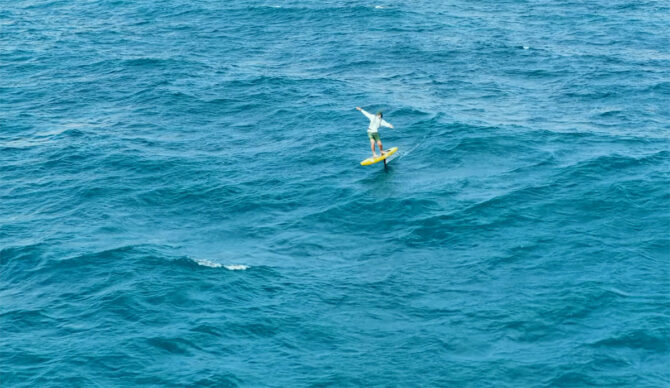
The ocean had turned hostile. Somewhere between Bali’s legendary Uluwatu cliffs and the remote jungle barrels of G-Land, Australian downwind foiler Josh Ku found himself utterly alone — separated from his safety vessel, battling currents that seemed intent on swallowing him whole, with 58 miles of open ocean serving as the only witness to what was becoming a fight for survival.
“It was clear this was extremely dangerous and I had bitten off more than I could chew,” Ku would later admit.
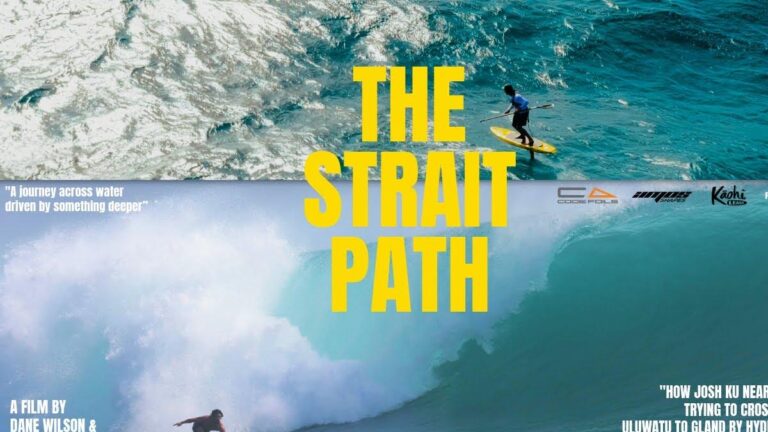
On June 27, 2025, the Australian paddle sports athlete completed what may be one of the most audacious open-ocean crossings in the brief but rapidly evolving history of downwind SUP foiling. The journey — now documented in a gripping short film by Ku and filmmaker Dane Wilson — connects two of surfing’s most storied waves across one of Indonesia’s most treacherous stretches of water.
Two Temples of Surf, Connected by Madness
The route itself reads like a pilgrimage through surfing’s spiritual geography. Uluwatu — Bali’s crown jewel, the wave that helped launch Gerry Lopez into counterculture immortality in the 1970s. And G-Land — Java’s hidden dragon, a remote left-hander accessed through jungle and discovered by intrepid souls like Peter McCabe during the same era of exploration.
For Ku, connecting these two sacred points wasn’t just an athletic challenge. It was an act of reverence.
“Both historic surf spots founded in the ’70s by adventurous surfers such as Gerry Lopez and Peter McCabe,” Ku explained of his motivation. “They inspired me to try something new; something that might not end in a glorious reward but instead end in failure — to trust your gut instinct and have a crack.”
That “crack” would test every ounce of his experience.
Downwind SUP foiling occupies a unique space in the watersports universe — part paddling endurance, part aviation, part ocean reading. The discipline demands that riders harness open-ocean swells, linking bumps of energy to stay aloft on their hydrofoil for miles at a time. There is no motor. No sail. Just a paddle, a board, a foil, and an intimate understanding of how the sea breathes.
“Downwind SUP foiling is one of the most demanding disciplines in watersports, requiring total self-reliance, deep ocean knowledge, and the ability to read constantly changing conditions,” explained Ku and Wilson in their film’s documentation.
The Bali Strait amplifies every one of those demands. Strong currents pulse between the islands. Conditions shift with little warning. The fetch is long enough to build serious seas. For a solo athlete on a foil, it’s the kind of environment where small miscalculations cascade quickly.
When the Ocean Showed Its Teeth
The film’s title pulls no punches: HOW I NEARLY DIED TRYING TO CROSS THE BALI STRAIT ON HYDROFOIL. This wasn’t hyperbole crafted for clicks. By Ku’s own account, the crossing became a masterclass in survival.
“I was dealt a super difficult card being the hardest run I’ve ever done, making the Molokai to Oahu crossing in Hawaii seem like a walk in the park,” Ku reflected. “Battling tough conditions, huge seas, and dangerous currents…”
That comparison carries weight. The Molokai-to-Oahu channel crossing is considered one of paddling’s ultimate tests — a 32-mile gauntlet through notoriously unpredictable Hawaiian waters. For Ku to describe the Bali Strait as significantly harder speaks to conditions that exceeded even worst-case planning.
At some point during the crossing, Ku became separated from his accompanying safety vessel. The exact circumstances and duration of the separation remain details the film explores, but the psychological toll of finding yourself alone in massive seas — miles from either shore — is not difficult to imagine.
The short film by Ku and Wilson captures moments from the harrowing journey, offering viewers a visceral window into both the beauty and terror of pushing limits in open water.
The Philosophy of Rolling the Dice
What drives someone to attempt a crossing where the margin for error is measured in heartbeats? For Ku, the answer connects to something larger than athletic achievement.
“I think it’s important in this day and age that we do kind of roll the dice, because that’s living.”
It’s a statement that will resonate with some and trouble others. The adventure sports community has long grappled with the tension between celebrating boundary-pushing feats and acknowledging the consequences when those boundaries push back.
Ku completed the crossing. He lived to share the story, to release the film, to inspire others in the growing downwind foiling community. But his own words — “bitten off more than I could chew,” “extremely dangerous,” “nearly died” — serve as their own cautionary tale.
A note to readers: Crossings of this nature require years of elite-level experience, extensive safety planning, professional support crews, and conditions expertise that cannot be replicated casually. The Bali Strait presents serious hazards including powerful currents and rapidly changing sea states. This crossing should not be attempted without professional guidance and comprehensive safety protocols.
What It Means for the Sport
The successful Uluwatu-to-G-Land crossing marks another milestone in downwind foiling’s rapid evolution from niche discipline to legitimate ocean adventure sport. As equipment improves and more athletes develop the skillset, we’re likely to see more ambitious channel crossings attempted worldwide.
But Ku’s experience also highlights the sport’s inherent risks. Unlike traditional paddling or even prone foiling, SUP foiling adds height and complexity — a fall at speed in open ocean isn’t just a reset, it’s a potential emergency.
The crossing received surprisingly little attention upon completion, a fact that seems to be changing as the documentary reaches wider audiences. For a feat that bridges two of surfing’s holiest grounds across 58 miles of unforgiving Indonesian ocean, Josh Ku’s journey deserves its place in the conversation about what’s possible when humans, boards, and foils meet the raw power of open water.
Whether that place is cautionary tale or celebration likely depends on who’s listening.
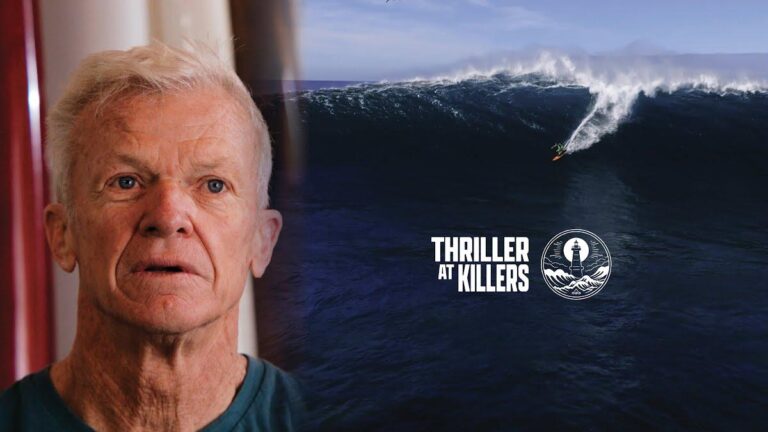
Organizers have given the official green light for the Thriller at Killers big wave event to run this Saturday, February 7, 2026, with a massive swell bearing down on Killers—the deepwater break off Todos Santos Island in northern Baja, Mexico. Forecasters are calling for waves in the 20–25 foot range, setting the stage for what could be a dramatic day of heavy-water surfing.
“The competition is on. See you at first light,” organizers posted on Instagram Wednesday, confirming competitors should prepare for a dawn patrol start.
The Field Takes Shape
Contest director Gary Linden oversees athlete selection through a three-pronged system: a digital-video qualifier series, carryover invitations for top finishers from the previous year, and wildcard picks at Linden’s discretion. It’s a format that rewards both proven performers and emerging talents willing to charge.
All eyes will be on Cody Purcell, the two-time consecutive men’s champion looking to notch a rare three-peat. Purcell’s path to Thriller at Killers began through the digital qualifier—a filmed wave at Todos Santos caught the selection committee’s attention and launched his dominant run at the event.
On the women’s side, Katie McConnell returns as the 2024 winner, joined by heavy-hitters Paige Alms and Justine Dupont in what promises to be a stacked heat sheet.
Confirmed Competitors
Men’s Field:
Cody Purcell (two-time defending champion)
Nic Lamb
Jojo Roper
Greg Long
Landon McNamara
Lucas Chianca
Willem Banks
Eric Nicholson
Quetzal Estrada
Chase Jacoway
Andres Flores
Christian Hatfield
Women’s Field:
Katie McConnell (2024 winner)
Paige Alms
Zoe Chait
Justine Dupont
Bianca Valenti
Isabelle Leonhardt
Quick Facts
Event: Thriller at Killers
Date: Saturday, February 7, 2026
Location: Killers, Todos Santos Island, Northern Baja, Mexico
Expected Wave Size: 20–25 feet
Contest Director: Gary Linden
Selection Process: Digital-video qualifiers, previous year carryovers, wildcard invites
The West Coast’s recent run of large swell has primed conditions for a legitimate big-wave showdown. Competition kicks off at first light—watch for live updates and results as the action unfolds.
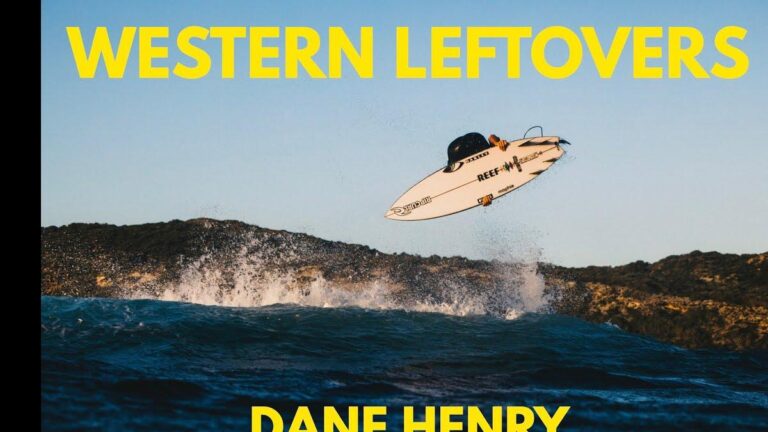
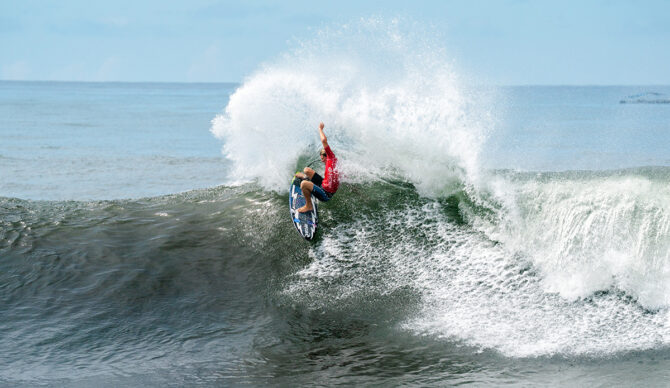
The air hung heavy with salt and expectation as Dane Henry dropped into a closing section at the World Junior Championships, threading a barrel before launching into the kind of full-rotation aerial that makes judges reach for high scores and rivals question their career choices. When the horn sounded, the 17-year-old from Australia’s Gold Coast had done what no compatriot had managed in years—he’d won a world title and punched his ticket directly into the Challenger Series.
It wasn’t just a victory. It was a statement.
For a nation that once dominated professional surfing like few others, Australia has spent the better part of a decade watching from the beach as Brazilian flags flew on victory podiums. But at this year’s World Juniors, something shifted. Australians filled three of the four men’s semifinal spots and swept all four women’s semifinal positions. The yellow and green wasn’t just present—it was unavoidable.
“This year at the World’s, the Aussies took over, which is pretty sick,” said Lennix Smith, a two-time World Junior semifinalist who’s emerged as one of the cohort’s most vocal leaders.
When asked about Henry’s abilities, Smith didn’t mince words: “Yeah, he’s pretty fucking good.”
The New School: Meet the Cohort
Dane Henry is the headliner, but he’s far from alone. This generation runs deep.
There’s Lennix Smith himself, whose consistency at the junior level—back-to-back semifinal finishes in 2024 and 2025—suggests a surfer built for the grind of professional competition. Vincent Winter and Hughie Vaughan have both emerged as legitimate threats in international junior events, each bringing their own stylistic signatures to the water.
What separates Henry, according to those who’ve competed against him, is his completeness. Smith broke it down after their semifinal heat: “His all-around ability is crazy. In our semi, he milked a one-footer for five points in the last 10 seconds, and got the score. So he can grind as well.”
That’s the mark of a future CT threat—someone who can throw progressive aerials in pumping surf but also scratch out heat wins when the ocean goes flat. It’s the difference between highlight-reel talent and championship-caliber competition.
The contrast with international rivals at this event was stark. Will Deane, the top American performer, bowed out in the Round of 16. The Brazilians, whose senior compatriots have dominated the Championship Tour for over a decade, failed to make significant noise.
The Pathway: Funding, Facilities, and Home-Court Advantage
Talent alone doesn’t win world titles. Infrastructure does.
Australia has rebuilt its competitive surfing pipeline with the kind of systematic investment that transforms potential into podiums. The High Performance Centre in Casuarina—a purpose-built facility on the New South Wales coast—has become the proving ground for the country’s most promising juniors. Government funding flows into development programs at levels that rival any surfing nation on earth.
But the real advantage might be geographic. Three of the seven Challenger Series events are held on Australian soil. The Championship Tour schedule sends roughly one-quarter of its annual stops to Australian beaches. For a young surfer trying to qualify, that’s not just convenience—it’s opportunity.
Henry’s wildcard into the Challenger Series means he’ll get immediate chances to test himself against established professionals, many of those tests coming in familiar waters with home crowds behind him.
“We’re coming at it pretty hard,” Smith said of the collective mindset. “We’re fired up for sure to get back and take on the world again. We just gotta be better at winning and not be losers.”
History and Precedent: The Drought and What Came Before
To understand what this moment means, you have to understand the absence.
Mick Fanning hoisted Australia’s last men’s world title trophy in 2013. That’s more than a decade of watching other nations—primarily Brazil—claim surfing’s ultimate prize. Gabriel Medina, Adriano de Souza, Filipe Toledo, Italo Ferreira, João Chianca. Eight of the last eleven men’s world titles have gone to Brazilian surfers, with only John John Florence interrupting the dominance.
It wasn’t always this way. In the 1970s and 1980s, Australia owned professional surfing. The country produced legends with the regularity of perfect point breaks. Mark Richards. Tom Carroll. Barton Lynch. The attitude was captured by Rabbit Bartholomew back in 1976, as reported by The Inertia’s historical coverage: “The fact is that when you are a young emerging rookie from Australia or South Africa, you not only have to come through the backdoor… but you also have to bust that door down.”
That aggression, that refusal to wait your turn—it defined Australian surfing’s golden era. And it’s the energy this new generation seems determined to resurrect.
The junior-to-senior pipeline has precedent for producing champions. Andy Irons won World Juniors before claiming three CT titles. Joel Parkinson followed the same path. Adriano de Souza and Gabriel Medina both converted junior success into senior dominance.
But the cautionary tales exist too. Finn McGill and Lucas Vicente both won junior world titles and failed to replicate that success at the highest level. The jump from prodigy to professional is littered with promise unfulfilled.
What Comes Next: The Window and the Obstacles
The timing, for once, favors Australia.
Several of the CT’s dominant forces—Medina, Toledo, Ferreira, Chianca—have crossed 30. Injuries have mounted. Retirements loom. The grip these surfers have held on world titles shows signs of loosening, creating space for a new generation to claim.
For Dane Henry, the path forward is concrete: the Challenger Series wildcard puts him directly in the qualification hunt. Strong results there—especially at the Australian stops where he’ll know the lineups intimately—could see him on the Championship Tour within a season or two.
His cohort will follow. Smith, Winter, Vaughan, and others will continue grinding through junior events and regional qualifiers, building the competitive muscle memory that separates those who peak early from those who peak when it matters.
The infrastructure is in place. The talent is undeniable. The historical window is opening.
Whether this generation can actually bust down the door—the way Rabbit demanded, the way Fanning and Parkinson once did—remains the question. But for the first time in years, Australia has surfers capable of asking it.
The yellow and green is coming. And they’re not waiting for an invitation.
Shaper Zack Flores just finished a new single-fin board. Instead of taking it for a normal spin, he grabbed the three strangest fins in his quiver and let chaos decide.
“I just finished my single fin, so instead of surfing it normally, I decided to test the three weirdest single fins I own,” Flores explained before paddling out.
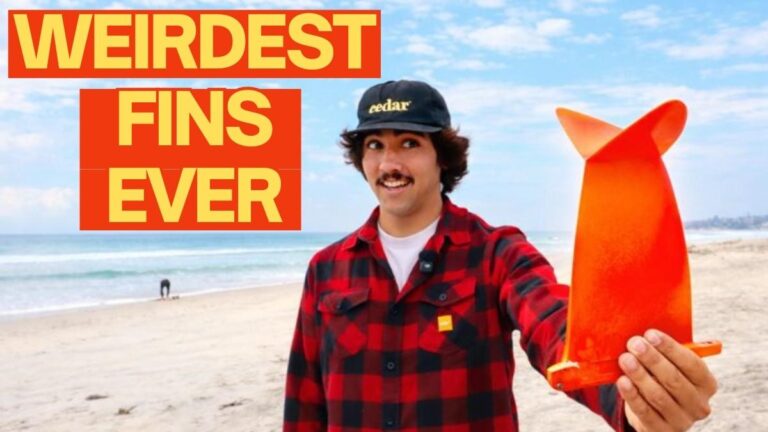
The lineup of experimental fins. Photo: YouTube // Screenshot
The Baseline: Greenough Power Blade
Flores kicked things off with the classic Greenough Power Blade — a proven performer that set the standard for everything that followed. Solid. Predictable. The control group.
The Toothed Speed Demon: 3D-Printed CAD Fin
Things got weird fast. This hyper-hydrodynamic creation features a toothed edge designed to slice through water at maximum velocity. The verdict? Blazing fast — but borderline unrideable.
“This fin was fast, but it was kind of sketchy. Like really wobbly,” Flores reported. “I did one turn where I hit the whitewater. The board flattened out on me. It was weird… really unstable and really wobbly. Kind of sketchy.”
The Winged Dark Horse: Cheyne Horan Fin
Then came what Flores called “the final boss of experimental fins” — a wild winged design that looked like it belonged on a spacecraft, not a surfboard.
“It is quite possibly the craziest fin that I’ve ever seen. I’m super excited to try it.”
The shocker? It absolutely ripped.
“I am super shocked. I did not think it was going to work very well,” Flores admitted after the session. Against all expectations, the Horan winged fin took the crown.
The Verdict
Sometimes the craziest-looking gear performs the best. The Cheyne Horan winged fin — a design that seemed destined to fail — emerged as the surprising champion of this bizarre fin showdown.
Hit play on the full video above to watch the mayhem unfold.
The full moon hung fat and silver over San Clemente as veteran surfer and writer Sam George pulled into the Trestles trailhead just before midnight. He’d come chasing the oldest dream in surfing—an empty lineup at one of California’s most crowded waves. What he found instead was a lesson every surfer eventually learns: the tribe thinks alike, even in the dark.
The parking lot told the story before he ever touched sand. Cars. Too many cars. And down on the berm, three teenagers sat watching the moonlit walls peel through, their silhouettes proof that the secret was already out.
Why Night Surfing Calls to Us
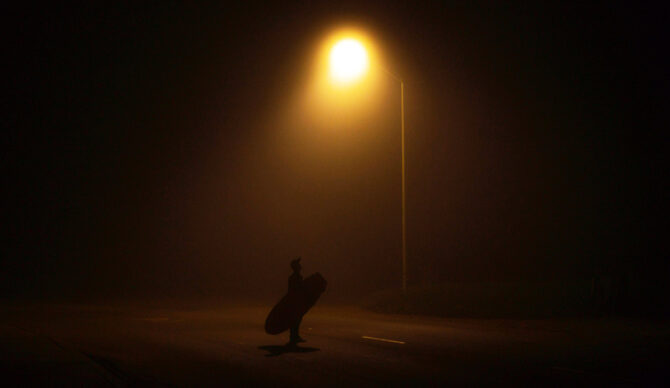
There’s a particular magic that pulls surfers toward the water after dark. It’s not just about dodging crowds—though that’s always part of the calculus. It’s something deeper, more primal. The ocean at night becomes a different creature entirely.
Without daylight’s familiar reference points, everything changes. Peripheral vision collapses. The wave rushing toward you seems faster, more urgent. Your focus sharpens to a laser point because survival demands it. The sensory deprivation paradoxically heightens every sensation—the hiss of water across fiberglass, the cold shock of spray, the sudden lift as the wave takes you.
George knows this feeling intimately. His night-surfing resume reads like a bucket list: Queens in Waikiki back in 1972, the streetlights of Kalakaua Avenue painting the empty lineup gold at 10 p.m. Rincon during a bioluminescence event, where every turn threw glowing green sparks into the darkness. Sandy Lane in Barbados under nothing but starlight. Scorpion Bay’s Third Point with a full moon illuminating those perfect Mexican walls. Playa Vernao in Panama, where the bioluminescent bloom was so thick the whitewater looked radioactive.
Each session carried its own particular beauty. Each promised—and delivered—the solitude that daytime surfing at popular breaks rarely offers. Lower Trestles, George figured, would be no different.
He figured wrong.
The Midnight Session at Lower Trestles
Lower Trestles isn’t just another California beach break. It’s an apex predator of a wave—a world-class cobblestone point that has hosted championship events and produced career-defining footage. It’s also a geographical bottleneck, a peak where takeoff zones compress tightly and surfers stack like rush-hour commuters waiting for the same train.
During daylight hours, the lineup regularly swells past thirty bodies. Elite competitors jostle with weekend warriors. Clean, makeable waves become obstacle courses. Even top-tier surfers struggle to complete unobstructed maneuvers when every shoulder hosts someone dropping in.
George had surfed Trestles countless times during his years living in San Clemente. He understood the dynamics. The midnight session was supposed to be the antidote—a full moon, favorable conditions, and presumably empty water.
But when he crested the berm and looked out at the peak, approximately fifteen surfers were already clustered on the takeoff zone. Fifteen. At midnight.
The math was brutal. These weren’t lost tourists or confused beginners. These were locals, competitors, dedicated wave-hunters who’d all made the same calculation George had made. Escape the daylight chaos. Surf under the moon. Score empty perfection.
Instead, they’d simply transported the chaos into darkness.
A set appeared on the horizon, black lines stacking against the silver-lit sky. The pack immediately began jockeying. Paddles dug. Boards swung for position. And then someone shouted what every surfer shouts when claiming a wave:
“Got it!”
What followed was chaos distilled. Multiple surfers dropped in simultaneously from both sides of the peak. From George’s position on the shoulder, it was impossible to determine who actually had priority. The darkness swallowed the usual visual cues—hand signals, eye contact, the subtle body language that governs lineup etiquette in daylight.
Someone got snaked. Maybe multiple someones. In the dark, accountability vanishes. Frustration has nowhere to land.
George watched one more set arrive, one more scramble unfold, then turned his board toward shore.
Crowds Find the Dark Too
The uncomfortable truth is that surfers are predictable creatures. We share the same apps, the same forecasts, the same mental playbooks. When swell fills in and conditions align, we converge like migrating birds on the same handful of premium breaks.
Night surfing was supposed to be the loophole. The dedication filter. Surely most people wouldn’t bother with the hassle—the trail walk in darkness, the heightened risk, the logistical complications of surfing when you can barely see.
But “most people” still leaves plenty of diehards. And at a wave like Lower Trestles, diehards are the default population. These are surfers who will do whatever it takes to score. If that means midnight sessions under a full moon, so be it.
The irony cuts deep. Night surfing’s appeal lies in escape from crowds, but as more surfers discover that appeal, the escape disappears. The solution becomes the problem.
Worse, the normal social mechanisms that regulate crowded lineups break down in darkness. Eye contact doesn’t work when you can’t see eyes. Right-of-way becomes guesswork. The shouted “Got it!” carries little authority when the shouter is just another shadow among shadows.
When Night Surfing Works—and When It Doesn’t
None of this means night surfing is a lost cause. George’s decades of after-dark sessions prove it can work beautifully under the right circumstances. The key variables are location and obscurity.
Night sessions at Queens in Waikiki worked because few tourists thought to paddle out at 10 p.m., even with streetlights making it safe. Bioluminescence sessions at Rincon worked because the phenomenon is rare enough that crowds don’t anticipate it. Remote breaks like Playa Vernao worked because they’re already lightly surfed in daylight—after dark, they’re practically private.
Lower Trestles, though? Its quality is too well-known. Its accessibility too convenient. Its regular crowd too committed. The full moon that makes night surfing possible there also makes it obvious. Every experienced local in San Clemente and San Diego looked at the same forecast, saw the same lunar cycle, and made the same decision.
Night-Surf Considerations:
Know your break intimately. Hazards invisible in daylight become lethal in darkness. Rocks, reefs, currents—you need mental maps, not visual ones.
Bring a buddy. Emergencies become exponentially more dangerous when no one can see you.
Understand local rules. Some beaches prohibit night access. Getting cited ruins any session.
Accept the etiquette ambiguity. If a crowd does show, recognize that normal priority systems may not function. Patience becomes paramount.
Choose obscurity over quality. That secondary peak the crowds ignore during the day? That’s your night-surf spot. The wave everyone wants stays crowded around the clock.
The Bridge of Sighs
George returned to his truck that night with salt in his hair and resignation in his gut. The tape deck was playing Robin Trower’s Bridge of Sighs, and the title track’s mournful lyrics caught something true:
“The sun don’t shine / The moon don’t move the tides / To wash me clean…”
The moon had moved the tides. It just hadn’t moved the crowd.
The next morning, George was back at Lower Trestles. Daylight this time. The usual chaos, the usual jockeying, the usual compromise between wave quality and wave availability. He paddled out anyway because that’s what surfers do. We return. We adapt. We accept the imperfect conditions because the alternative—not surfing—is unthinkable.
Maybe the real lesson isn’t that night surfing fails, but that certain waves have transcended the old rules entirely. Lower Trestles operates at a different density now, a popularity level that no scheduling trick can defeat. The crowd isn’t avoiding your session. The crowd is your session, whatever hour you choose.
For true solitude, you’ll need to look elsewhere. Lesser-known breaks. Imperfect conditions. Waves that require more sacrifice than a midnight alarm.
The empty lineup still exists. You just won’t find it at an apex peak, no matter how dark it gets.
The morning fog hangs low over the Santa Barbara harbor as Conner Coffin guides his 26-foot vessel through the channel, the hull cutting quietly through water that holds decades of local fishing history. The boat, originally built in 1988 for the Pettersen family, has been brought back to life under Coffin’s hands—re-powered, restored, and ready to write new stories. It’s a far cry from the frenetic energy of the Championship Tour, where every heat was a battle and every wave carried the weight of ranking points and sponsorship obligations.
But don’t get it twisted: Conner Coffin is not retired.
He’s simply chosen a different path—one that trades the relentless grind of full-time competition for the rhythms of freesurfing, fatherhood, and a life rooted in the community that raised him.
Why He Stepped Away From Full-Time Competition
The decision to leave the World Surf League tour wasn’t born from defeat or disillusionment. Coffin walked away while still at the height of his abilities, which made the choice both courageous and complex.
“I felt more drawn towards being a freesurfer and having time to do more than just compete at that point in my life,” Coffin explained. “I have always loved surfing and being in and around the ocean through fishing, diving, and traveling. I also have a lot of passions outside of surfing so I was excited to be able to embrace those more.”
The timing aligned with profound personal shifts. Marriage was on the horizon, and with it, the desire to build a family on his own terms.
“I was also getting married and my wife and I wanted to start having kids,” he said. “As much as doing the tour with a kid seemed like it could be awesome, I really wanted to be able to be fully present for my son’s birth and the first years of his life.”
That presence—being there for first steps, first words, the mundane magic of morning routines—held more weight than another contest result ever could. The hardest part wasn’t the transition itself, but the psychological untangling from a competitive identity he’d worn for years.
“The hardest part for me was just feeling like I was walking away from something that I was good at and that I thought I could still succeed at,” Coffin admitted. “I think we get a bit attached to the rush, the adrenaline, and the chase of living that lifestyle as well.”
The Boat, The History, and a Film Taking Shape
In July, Coffin completed the restoration of a 26-foot fishing boat that had spent decades working the waters off Santa Barbara under the Pettersen family’s care. The project was more than a mechanical undertaking—it was an act of preservation, connecting him to a lineage of local watermen who understood the ocean not just as playground, but as provider.
The restoration demanded everything: sanding down years of salt and wear, re-powering the engine, and honoring the vessel’s original character while preparing it for new adventures. Coffin documented the process meticulously, capturing not just the technical work but the stories embedded in the boat’s bones.
Now, that documentation is evolving into a film project. Working alongside collaborators Jeff Hull, Eddie Anderson, and Clint Malone, Coffin is producing a feature that chronicles the boat’s history and the family who worked it for years. It’s a story about craftsmanship, continuity, and the way objects can carry memory across generations.
The project represents a creative freedom that competition schedules never allowed—the ability to pursue a vision from inception to completion without the pressure of the next event looming.
Rod and Reel: Commercial Fishing and Community Roots
Since completing the restoration, Coffin has put the boat to work in ways that connect him directly to Santa Barbara’s culinary ecosystem. He’s been running rod-and-reel commercial trips, supplying local restaurants with fresh-caught seabass and halibut.
There’s something profoundly grounding about the work. The predawn departures, the patience required to read conditions and currents, the physical labor of hauling in a catch—it’s a different kind of performance than competitive surfing, but it demands similar attunement to the ocean’s moods.
The fish he lands end up on plates at restaurants throughout Santa Barbara, creating a direct line between his effort and his community’s tables. It’s local in the truest sense: caught by a local waterman, prepared by local chefs, consumed by neighbors and visitors who may never know the hands that pulled their dinner from the Pacific.
This integration of surfing life with fishing life reflects Coffin’s broader philosophy—that the ocean offers multiple ways to engage, and that a professional surfer’s skills are transferable to other maritime pursuits.
Cold Beer Surf Club and the Media Pivot
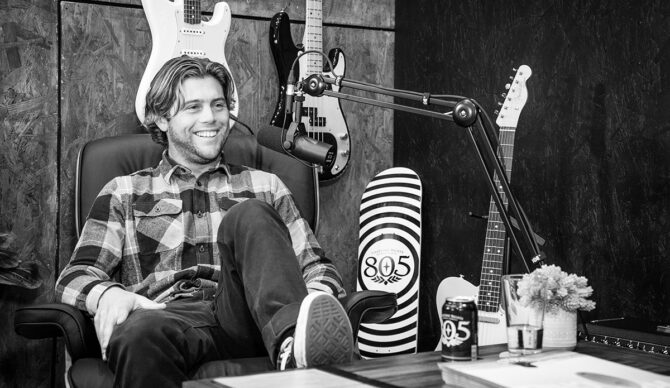
Coffin’s post-Tour life also includes a significant media presence through Cold Beer Surf Club, a podcast he co-hosts in partnership with 805 and the WSL. The show operates without strict format constraints, allowing for the kind of meandering, authentic conversations that reveal character and perspective.
The format suits Coffin’s personality—warm, curious, unburdened by the need to perform competitive intensity. Guests range across the surf world and beyond, and the discussions often venture into territory that traditional sports media rarely explores.
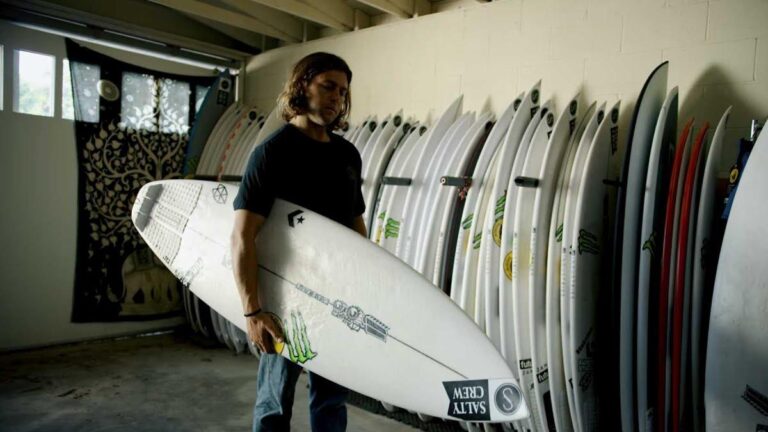
He’s also maintained relationships with board sponsors, appearing in content like the JS Industries episode “Conner’s Dream Quiver for California & Beyond,” where he walks through his equipment choices with the enthusiasm of someone who genuinely loves the craft of board selection.
These media engagements aren’t afterthoughts—they’re central to how Coffin has constructed a professional surfing career that doesn’t depend on competition results.
Mentorship, Music, and the Long View
Perhaps the most significant shift in Coffin’s post-Tour identity is his orientation toward mentorship. Having navigated the complexities of professional surfing—the sponsor relationships, the travel logistics, the mental demands—he’s positioned to guide younger surfers chasing similar dreams.
“I feel so fortunate to have learned and lived a ton through my experience as a pro surfer,” he reflected, “and I think it would be really cool to find a way to share some of the knowledge with younger kids who are interested in chasing a similar dream.”
His advice carries the weight of experience: treat your surfing career like a small business. Communicate professionally with sponsors. Show up prepared for signings and photo shoots. Build your own brand rather than waiting for others to define it.
Beyond surfing, Coffin has leaned into music as a complementary creative outlet. He draws parallels between the two pursuits: “Music is so similar to surfing… The feeling of getting locked into a good jam with friends is so similar to riding a wave but I love that the guitar is always there to pick up and noodle on.”
It’s this integration—surfing, fishing, music, family, media—that defines his current chapter. The question of “what comes after the Tour” has been answered not with a single pivot but with a portfolio of passions.
Quick Tips for Young Surfers From Conner Coffin
Treat it like your own business: Take ownership of your career trajectory from the start.
Communicate professionally: Stay in regular contact with sponsors; respond promptly to opportunities.
Show up prepared: Whether it’s a photo shoot, a signing, or a contest, professionalism matters.
Build transferable skills: The lessons learned through surfing—discipline, self-promotion, relationship management—apply to life beyond competition.
Surfing Until the Wheels Fall Off
What emerges from Coffin’s story is a vision of professional surfing as something more expansive than the competitive circuit typically suggests. The Tour is one chapter, not the entire book.
“I feel free to go out and surf more creatively all of the time, ride what I want to ride, and not have to be focused on preparing for the next event,” Coffin said. “I think I love surfing more than ever now.”
That renewed love—unburdened by rankings, heat strategies, and the pressure of televised performances—has reconnected him to why he started surfing in the first place. It’s a reminder that for many professionals, the sport itself can get lost in the business of competition.
“Surfing for me and I think a lot of people is a life-long endeavor,” Coffin explained. “I hope I’m surfing until the wheels fall off and whether I’m able to make a living doing it or not, it’s always something I will do and enjoy.”
As the Santa Barbara fog lifts and the morning light catches the restored hull of his fishing boat, Conner Coffin represents something increasingly rare in professional sports: an athlete who understood when to redefine success on his own terms. The waves will always be there. The fish will run with the seasons. His son will grow up watching his father navigate both.
That’s not retirement. That’s just a different kind of life, lived fully.
The frame opens on an empty lineup. No crowds jostling for position, no jetskis buzzing the channel—just a clean peak rolling toward a stretch of coastline so untouched it looks almost prehistoric. Wind rips across the dunes behind, bending coastal scrub sideways, and somewhere off-camera, someone is laughing. This is South Africa as most surfers dream of it but few ever see.
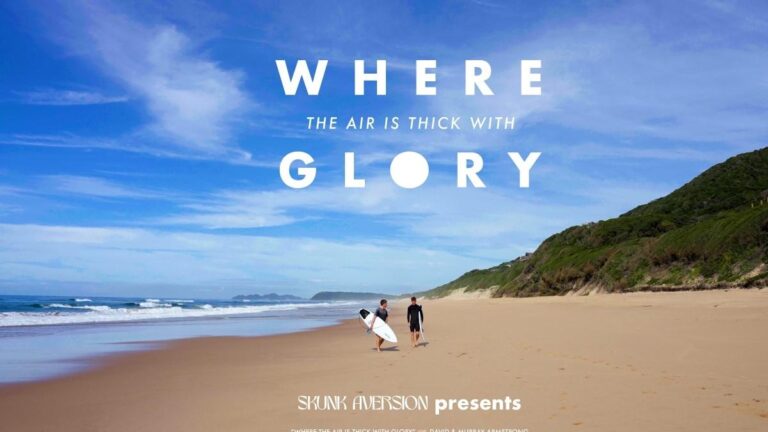
Where the Air is Thick With Glory, a newly released 17-minute surf film, doesn’t try to reinvent the genre. It does something harder: it strips surfing back to why any of us paddled out in the first place.
Setting the Coast
The film traces an ambitious route along the African seaboard, beginning in the tropical warmth of Mozambique and ending in the cold, howling waters off Cape Town. It’s a journey of stark contrasts—palm-fringed points give way to wind-scoured headlands, turquoise shallows darken into brooding Atlantic swells.
What emerges isn’t a highlight reel of the “best” waves but something more honest: a portrait of a coastline in all its moods. The filmmakers from the Skunk Aversion YouTube channel let shots linger on rugged mountains plunging into the sea, on long stretches of sand where tire tracks are the only evidence of human presence. The light shifts from the honeyed glow of subtropical mornings to the grey, dramatic skies that blanket the Western Cape in winter.
For viewers unfamiliar with South Africa’s surf potential, the film serves as a quiet revelation. This is a country with thousands of kilometers of largely unexplored coastline, world-class setups hidden behind difficult access and fickle conditions. The Armstrong brothers and their crew aren’t conquering it—they’re wandering through it, witnesses rather than conquerors.
The Brothers and the Band of Friends
At the heart of the film is a relationship as old as surfing itself: siblings who share a stoke. Dave and Murray Armstrong anchor the narrative, their bond evident in small moments—trading waves, ribbing each other on the beach, moving through campsites with the ease of people who’ve done this their whole lives.
But the brothers don’t hog the spotlight. The film expands to include a tight circle of friends, and it’s in this dynamic that Where the Air is Thick With Glory finds its emotional center.
“Good waves with anyone is sick, but to do it with those closest to you is extremely special.”
— Dave Armstrong
That quote, delivered without fanfare somewhere in the film’s middle section, encapsulates everything the project is reaching for. Surfing, at its core, has always been a social act—even when we paddle out alone, we carry the people who taught us, who traveled with us, who stayed up late talking about that one session years ago.
The film doesn’t manufacture drama between its subjects or engineer conflict for narrative tension. Instead, it trusts that watching friends simply be together—cooking meals, packing vehicles, studying forecasts, sharing waves—is compelling enough. And it is.
Waves, Weather, and Landscape
Mozambique arrives warm and forgiving. The waves are playful, the sessions long. You can almost feel the humidity through the screen, the kind of tropical surf trip where wetsuits stay buried at the bottom of board bags and sunscreen becomes a full-time job.
Then the journey moves south, and everything changes.
Cape Town’s coastline is a different beast entirely. The water drops twenty degrees. The wind that shapes the famous dunes also turns many sessions into survival exercises. The crew dons thick rubber, and the mood shifts from languid exploration to something more determined.
This temperature and terrain whiplash gives the film its visual rhythm. Warm tones bleed into cool ones. The editing doesn’t rush the transition but lets viewers sit in each climate, each landscape, until they feel the journey’s physical toll and reward.
The surf itself spans the full spectrum—hollow beach breaks, long point waves, wedging reef setups. The cinematography avoids the telephoto compression that makes so many surf films feel samey. Wide shots establish scale: small figures against massive dunes, lone surfers on peaks that seem to stretch forever. You understand, viscerally, just how much coastline this continent offers.
Why the Film Resonates
We’re living through a curious moment in surf media. The industry’s commercial engine still churns out high-octane competition edits and aspirational content designed to sell products. But alongside that machinery, a quieter movement has been building—films that prioritize feeling over spectacle, friendship over athleticism, place over performance.
Where the Air is Thick With Glory slots perfectly into this counter-narrative. At 17 minutes and 42 seconds, it’s long enough to develop atmosphere but short enough for a lunch-break watch. It doesn’t require viewers to care about heat scores or sponsor obligations. It asks only that you remember what drew you to surfing—or, if you’ve never surfed, that you understand why someone might build a life around chasing waves with people they love.
South Africa remains one of the planet’s most underrated surf destinations in mainstream consciousness. J-Bay gets its due during the Championship Tour, but the country’s broader potential—the diversity of breaks, the rawness of the landscape, the adventure still available to those willing to seek it—often gets overlooked. This film, modestly but effectively, makes the case for paying closer attention.
The Takeaway
In an era of infinite content competing for shrinking attention spans, Where the Air is Thick With Glory makes a quiet argument for slowness, for intimacy, for the kind of trip that doesn’t need to prove anything to anyone. Dave and Murray Armstrong, along with their friends and the team at Skunk Aversion, have crafted something that feels less like a film and more like an invitation.
Watch it with someone you’ve shared waves with. Or watch it alone and think about who you’d want beside you on that empty South African peak.
Either way, watch it.


 “Are you paddling for this? Me neither.” Photo: YouTube / We Bodyboard
Drone pilot Shaun Petersen quietly sat on this full-session footage for nearly a year before finally releasing it through the We Bodyboard YouTube channel. The wait? Absolutely worth it.
The clip captures Cape Solander—known to locals simply as “Ours”—at its most violent. Towering, heaving walls of ocean detonate over shallow reef while Australia’s most committed big-wave chargers scratch into bombs that look more like extinction-level events than rideable waves. The aerial perspective makes it even more gut-wrenching: you see the scale, the spray, the sheer tonnage of water collapsing with thunderous force.
Full session: “THIS IS INSANE!! BIGGEST CAPE SOLANDER IN A DECADE!!” via We Bodyboard / Shaun Petersen
Jason Kempshall of the We Bodyboard channel summed it up perfectly:
“Are you paddling for this? Me neither.” Photo: YouTube / We Bodyboard
Drone pilot Shaun Petersen quietly sat on this full-session footage for nearly a year before finally releasing it through the We Bodyboard YouTube channel. The wait? Absolutely worth it.
The clip captures Cape Solander—known to locals simply as “Ours”—at its most violent. Towering, heaving walls of ocean detonate over shallow reef while Australia’s most committed big-wave chargers scratch into bombs that look more like extinction-level events than rideable waves. The aerial perspective makes it even more gut-wrenching: you see the scale, the spray, the sheer tonnage of water collapsing with thunderous force.
Full session: “THIS IS INSANE!! BIGGEST CAPE SOLANDER IN A DECADE!!” via We Bodyboard / Shaun Petersen
Jason Kempshall of the We Bodyboard channel summed it up perfectly:
 On June 27, 2025, the Australian paddle sports athlete completed what may be one of the most audacious open-ocean crossings in the brief but rapidly evolving history of downwind SUP foiling. The journey — now documented in a gripping short film by Ku and filmmaker Dane Wilson — connects two of surfing’s most storied waves across one of Indonesia’s most treacherous stretches of water.
 For a nation that once dominated professional surfing like few others, Australia has spent the better part of a decade watching from the beach as Brazilian flags flew on victory podiums. But at this year’s World Juniors, something shifted. Australians filled three of the four men’s semifinal spots and swept all four women’s semifinal positions. The yellow and green wasn’t just present—it was unavoidable.
“This year at the World’s, the Aussies took over, which is pretty sick,” said Lennix Smith, a two-time World Junior semifinalist who’s emerged as one of the cohort’s most vocal leaders.
When asked about Henry’s abilities, Smith didn’t mince words: “Yeah, he’s pretty fucking good.”
For a nation that once dominated professional surfing like few others, Australia has spent the better part of a decade watching from the beach as Brazilian flags flew on victory podiums. But at this year’s World Juniors, something shifted. Australians filled three of the four men’s semifinal spots and swept all four women’s semifinal positions. The yellow and green wasn’t just present—it was unavoidable.
“This year at the World’s, the Aussies took over, which is pretty sick,” said Lennix Smith, a two-time World Junior semifinalist who’s emerged as one of the cohort’s most vocal leaders.
When asked about Henry’s abilities, Smith didn’t mince words: “Yeah, he’s pretty fucking good.”
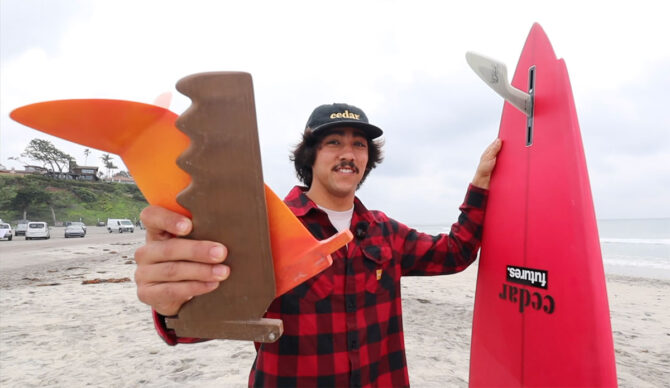 The lineup of experimental fins. Photo: YouTube // Screenshot
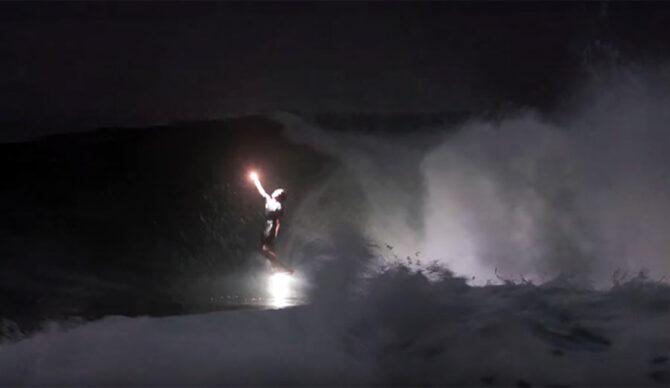
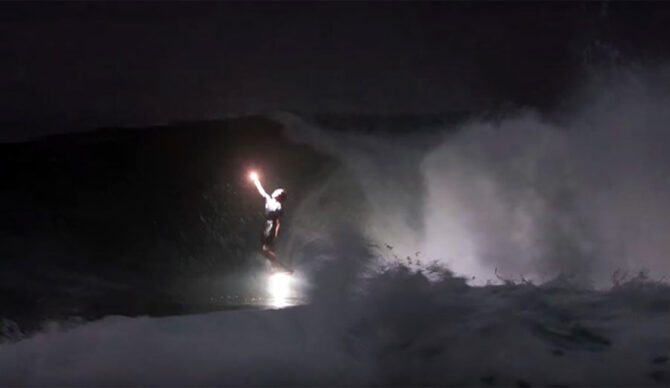
 What followed was chaos distilled. Multiple surfers dropped in simultaneously from both sides of the peak. From George’s position on the shoulder, it was impossible to determine who actually had priority. The darkness swallowed the usual visual cues—hand signals, eye contact, the subtle body language that governs lineup etiquette in daylight.
Someone got snaked. Maybe multiple someones. In the dark, accountability vanishes. Frustration has nowhere to land.
George watched one more set arrive, one more scramble unfold, then turned his board toward shore.
What followed was chaos distilled. Multiple surfers dropped in simultaneously from both sides of the peak. From George’s position on the shoulder, it was impossible to determine who actually had priority. The darkness swallowed the usual visual cues—hand signals, eye contact, the subtle body language that governs lineup etiquette in daylight.
Someone got snaked. Maybe multiple someones. In the dark, accountability vanishes. Frustration has nowhere to land.
George watched one more set arrive, one more scramble unfold, then turned his board toward shore.